Mission Technology Operations Team Contact Request Briefing

Low Earth Orbit (LEO) Reclamation Services

Clearing the Path to Our Future Among the Stars

Icarus Orbital Systems™, currently in the validation and pre-seed stage, will provide active orbital debris mitigation as well as resource recovery services in the Equatorial Low Earth Orbit band. We transform space debris from hazard to resource—enabling sustainable expansion beyond Earth.

Scroll

Orbital Stewardship for the Space Age

The Founders of Icarus Orbital Systems™ are dedicated to addressing one of the most pressing risks to humanity's continued use of space: the rapid accumulation of uncontrolled orbital debris. As satellite constellations expand and launch cadence increases, debris has emerged as a direct threat to commercial operations, national security assets, and future human activity beyond Earth.

Our mission is deliberately twofold: provide active orbital debris mitigation services initially focused on the Equatorial Low Earth Orbit (ELEO) band, and leverage these operations to enable responsible salvage and recycling of unclaimed orbital materials.

Earth from orbit
130M+
Pieces of orbital debris
7.6 km/s
Typical orbital velocity
ELEO
Equatorial Low Earth Orbit focus

From Hazard to Resource

Defunct satellites and spent launch components contain high-value aerospace materials that have already incurred the most prohibitive cost in the space industry: launch to orbit. By recovering and reprocessing these materials, we transform what is currently a hazard into an economically valuable resource stream.

This reframing transforms debris mitigation from a pure cost center into a revenue-generating activity, improving economic sustainability while addressing safety concerns.

Al
Aluminum Alloys
Ti
Titanium
Ni
Nickel
Au
Precious Metals

Distributed Fleet Architecture

Our system integrates human supervision with AI-assisted coordination for scalable, safe debris mitigation operations.

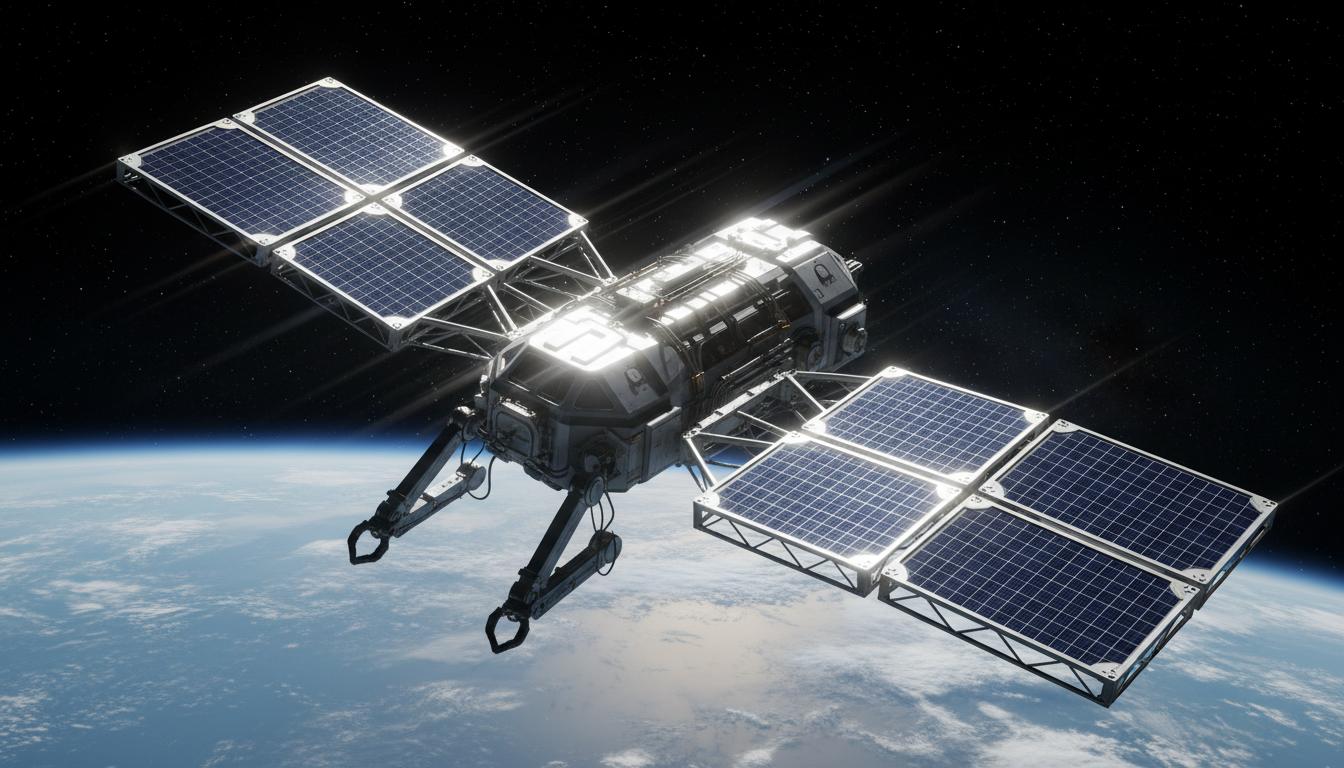
Space tug vehicle

Primary Tele-Operated Tugs

Human-controlled command vehicles serve as operational hubs for drone flotillas. Each tug provides navigation, mission planning, real-time decision-making during capture, and safety intervention capabilities. Designed for long-duration service with modular systems enabling technology upgrades.

Precision propulsion Redundant communications High-reliability sensors
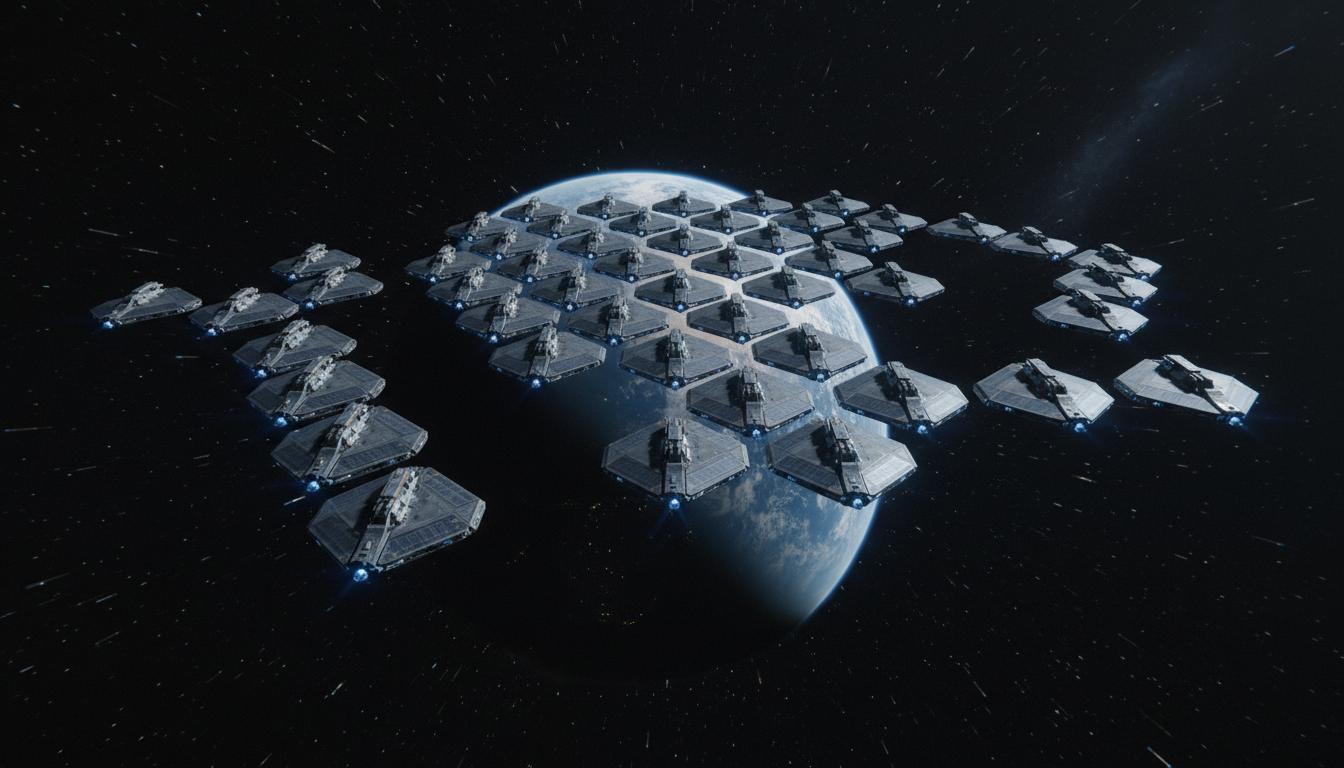
Drone fleet formation

AI-Assisted Drone Flotillas

Each primary tug coordinates 10-20 semi-autonomous drone tugs operating in synchronized grid patterns. AI systems optimize collision avoidance, formation stability, and cooperative behavior—allowing the flotilla to function as a coherent system rather than independent units.

Formation flying Grid-based movement Obstacle detection
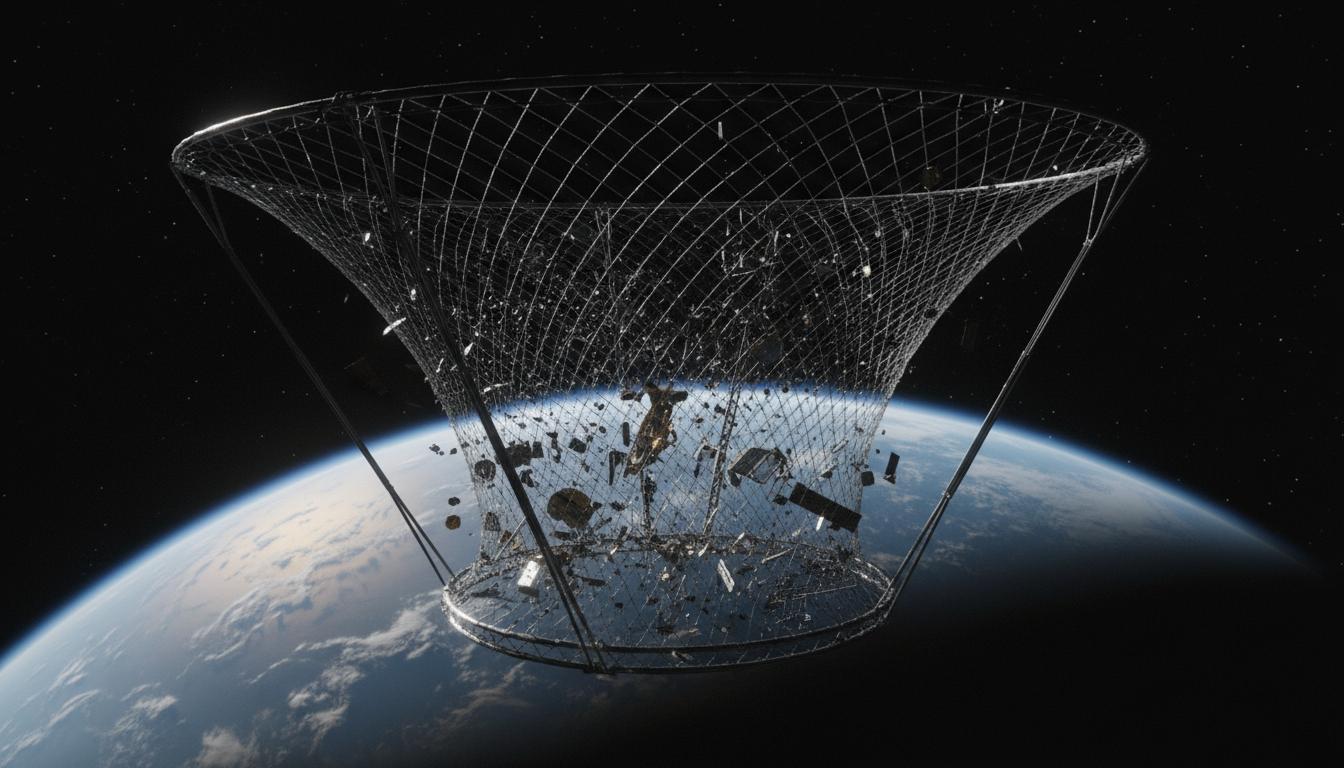
Capture net in operation

Wide-Area Capture Systems

Two-mile-wide, carbon-strand-reinforced poly-mylar nets designed for low relative velocity capture. These systems minimize fragmentation risk while enabling controlled engagement with varied debris sizes and shapes. Unlike rigid mechanisms, net-based systems provide flexibility for irregular geometries.

2-mile span Fragmentation-minimizing Retrievable design

Technical Specifications

Orbital Processing Stations

Modular facilities for debris sorting, disassembly, and material preparation

Human-in-the-Loop Control

Supervised autonomy ensuring accountability and regulatory compliance

Fleet Coordination

Synchronized grid patterns for systematic corridor clearing

Safety Architecture

Redundant systems with fail-safe disengagement protocols

Phased Development Strategy

A milestone-driven approach that validates technical, operational, and economic assumptions before expansion.

01 Years 1-2

Concept Validation

  • Finalize system architecture for tele-operated tugs and AI-assisted drone flotillas
  • Develop digital simulations of debris capture operations
  • Conduct regulatory landscape analysis and early agency engagement
  • Establish ground-based command and control framework
02 Years 3-5

Prototype Deployment

  • Build and test prototype tug and drone systems
  • Validate capture mechanisms under controlled conditions
  • Demonstrate coordinated multi-vehicle operations
  • Secure pilot service contracts
03 Years 6-8

Initial Orbital Operations

  • Deploy limited flotillas into targeted ELEO corridors
  • Conduct contracted debris-clearing missions
  • Establish operational credibility and safety record
  • Begin material recovery and processing
04 Years 9-15

Scaled Operations

  • Achieve sustained, multi-corridor operations
  • Expand Orbital Processing Station capacity
  • Deliver processed materials to orbital customers
  • Achieve cash-flow-positive operations

Why Equatorial Low Earth Orbit?

ELEO—approximately 5°N to 5°S latitude, 160-2000 km altitude—offers exceptional strategic importance. This band provides launch efficiency from equatorial sites, reduced fuel requirements, optimal geometry for global communications, and the most radiation-protected region outside Earth's atmosphere.

Launch Efficiency Reduced Fuel Costs Radiation Protection
ELEO orbital diagram

Management Team

Multidisciplinary expertise spanning systems thinking, security, operations, and aerospace engineering.

Troy Bird

Founder & Chief Visionary Officer

Principal originator of the Icarus concept. Background in systems visualization, spatial reasoning, and digital design. NSS member with expertise in conceptualizing coordinated orbital operations and multi-asset space systems.

Jedidiah Bird

Director of Security & Technical Operations

Holds Top Secret clearance with the U.S. Department of Energy. Over a decade of experience in security architecture, systems reliability, and operational integrity across government and private-sector environments.

Sandra Bird Aldridge

Director of Strategy & Operations

Over two decades of experience in federal and private-sector inspection, audit, and compliance roles. Expertise in operational governance, strategic planning, and multi-stakeholder program management.

Jeff Hodge

Technical Advisor (Aerospace Systems & Propulsion)

15+ years as aerospace engineer at NASA Langley Research Center. Managed hypersonic wind tunnel facilities and served as Facility Safety Head. Provides technical review and risk assessment for propulsion and aerodynamic concepts.

Brian Dobben

Technical Advisor (Manufacturing & Welding Engineering)

Welding Engineer at A. O. Smith Corporation with extensive experience in robotic welding automation and advanced manufacturing. Former Senior Welding Engineer at Chrysler. Expertise in Six Sigma, Lean Manufacturing, and complex process optimization across automotive and industrial sectors.

Request a Technical Briefing

For inquiries from commercial satellite operators, government agencies, investors, and strategic partners.

Email
info@icarusorbitalsystems.com
Headquarters
United States

Request Submitted

Thank you for your interest. Our team will review your inquiry and respond within 2-3 business days.